There is only music, politics, and music. And sports.

Tuesday, November 19, 2013

Pitchfork: Lessons in Taste Revisionism

I started reading Pitchfork in 2001 or 2002.  Back then its website was www.pitchforkmedia.com, since www.pitchfork.com was the home of a horribly designed website called "Livestock World."  Searching for a snarky review of the newest indie record – an act whose value in social capital was just beginning to dawn on me – I frequently found myself looking at animated GIFs of farm equipment.  I tell this story not to establish my credibility as an early, unsung supporter of Pitchfork.  Actually, the only reason the site popped up in my AltaVista search in the first place is probably because, by the early 2000s, Pitchfork had already begun its ascent as an indie music tastemaker.

But the fact that Pitchfork's namesake URL once hosted a shoddily-designed site hawking farm equipment is kind of funny: it conjures up visions of a silly, latter-day Nietzschean genealogy.  In other words, the site wasn't always a "hegemon of taste".  Indeed, as the Livestock World story illustrates, Pitchfork’s origins were humble and pedestrian (something the site’s founder Ryan Schreiber has always explicitly noted).  What he and others have noted with less frequency, however, is the extent to which the site's finely tuned tastes have themselves shifted since its popularity rise in the early 2000s.  Today, Pitchfork may indeed be a hegemon of taste.  Yet the logic underpinning its influential evaluations has not been particularly stable.

From this...
[1999 site header]

Friday, November 8, 2013

Fragment Pop! (Part II)

In my last post, I wondered about “revolutions” in popular music, about how we use that term and what it often signifies in the stories we tell about pop music.  Several of the, like, five people I invited to read the blog wondered whether I was claiming that artists like Dylan and The Beatles were revolutionary in fact, and not just in narrative.  And also whether I thought rap or hip-hop was not revolutionary, in fact.  The argument lurking behind these questions is, of course, that claiming the first group of artists is revolutionary and the second not is to speak from a very narrow position, culturally and racially speaking.  Indeed, wasn’t the emergence of hip-hop in the 1980s experienced as revolutionary for many people, particularly young urban blacks, who felt little to no connection to the white pop artists of the 1950s and 1960s?

(image source)

Sunday, November 3, 2013

Revolutions and Fragmentations

I’m already breaking one of my initial caveats here: I only have 5 minutes to write at the moment, so this will not be a “one-sitting” post.  And now I realize that my caveats, though designed to alleviate my writing neuroses, are themselves somewhat neurotic.  Hence the need to bend them now!

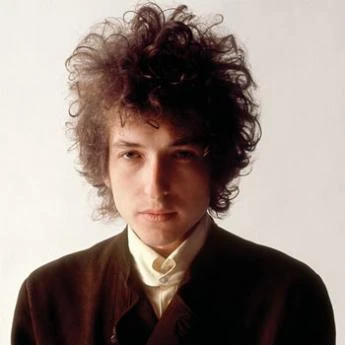
In any case, an initial hypothesis.  Or, more precisely, a question: Whither music revolutions?  Whither the thoroughgoing changes that we usually think of when we speak of Buddy Holly, The Beatles, or Bob Dylan?  Popular music, it seems, is a post-revolutionary endeavor, and has been for…fifty years, perhaps?  There have been changes, certainly: a thousand exciting new genres and artists have come, gone, and come again.  But since about 1970, there have been precious few – no, zero – evolutions in popular music that our culture speaks of with the same reverence as those of the 1950s and 1960s.  No changes that have made us say: “From that moment, from this artist, with that sound, everything
changed.”

"Clever girl..." (image source)